What Parts Get Replaced During a Minor Service?
If you’ve booked a “minor service” for your car and wondered exactly what you’re paying for, you’re not alone. Minor services are the routine check-ups that keep your car running reliably between the bigger, more involved services. Here’s a breakdown of what’s typically included and which parts commonly get replaced.
What Is a Minor Service?
A minor service is a shorter, more affordable check-up usually recommended every 6 months or 10,000–12,000 miles (check your manufacturer’s schedule). It focuses on the basics that need frequent attention, rather than the deeper inspection and part replacement covered in a major service.
Parts Commonly Replaced in a Minor Service
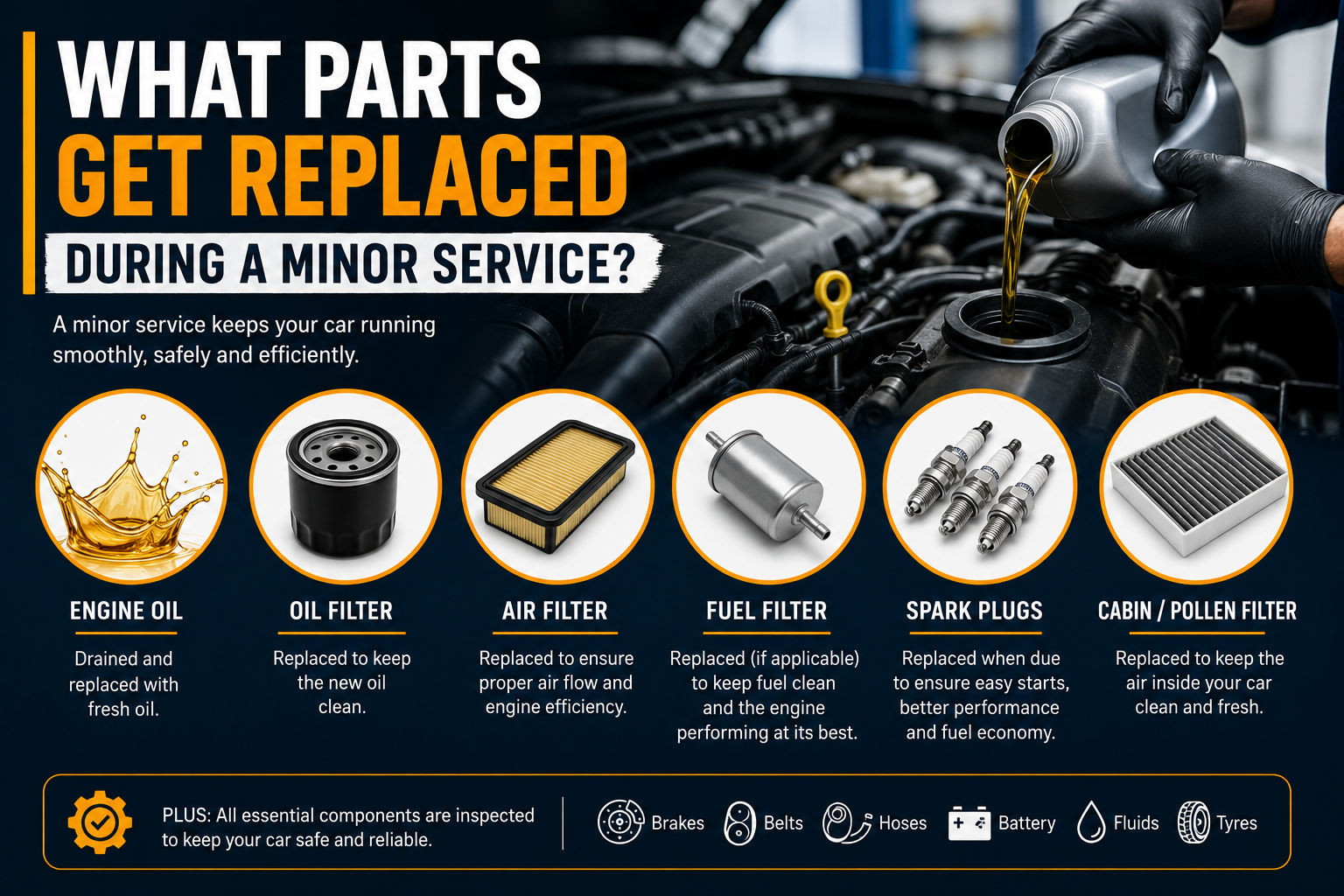
1. Engine Oil and Oil Filter
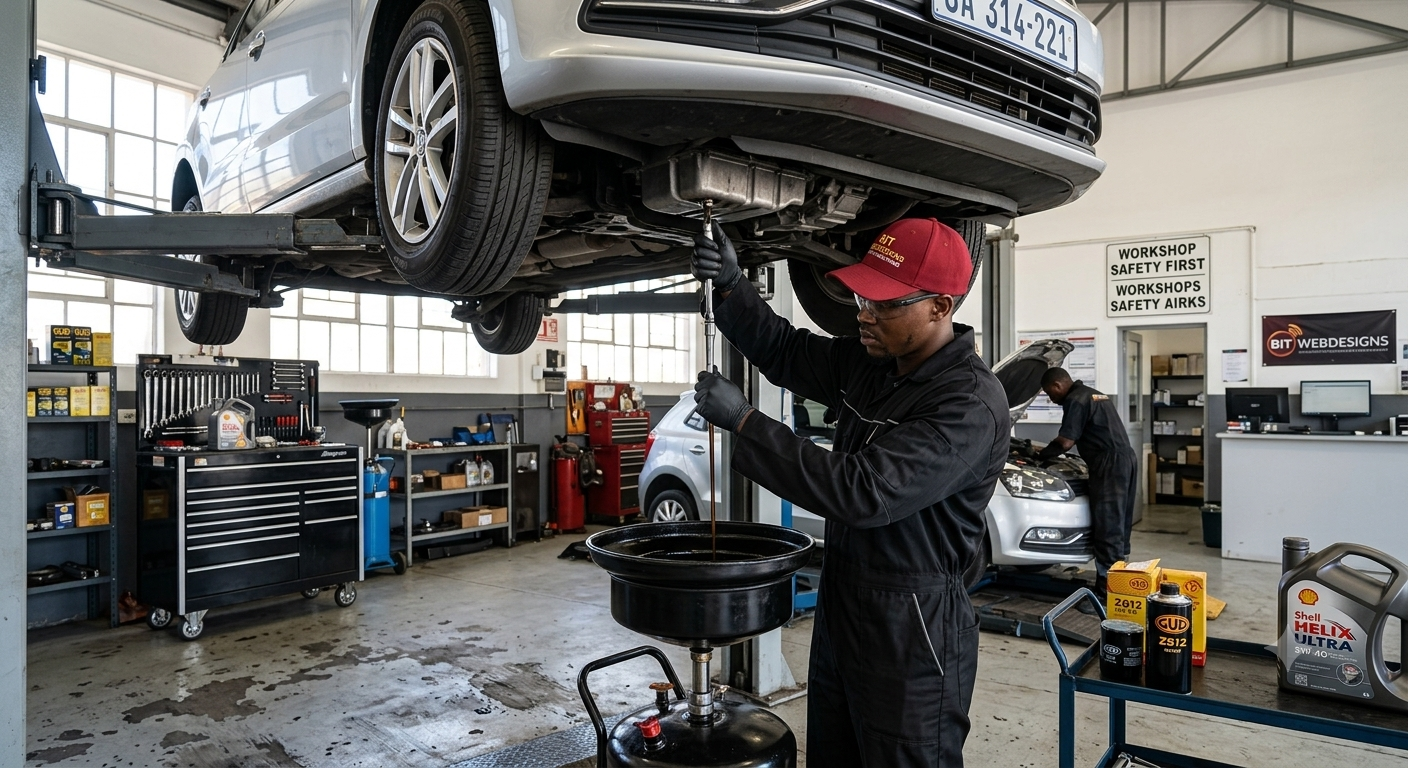
This is the core of almost every minor service. Fresh oil keeps the engine lubricated, and a new filter ensures contaminants are properly trapped rather than recirculated.
2. Air Filter (if due)
The engine air filter is checked and often replaced if it’s dirty or clogged, since a blocked filter reduces engine efficiency and fuel economy.
3. Cabin Air Filter (if applicable)
Some minor services include swapping the cabin filter, which affects air quality inside the car and airflow through the heating and air conditioning system.
4. Wiper Blades (if worn)
If your wipers are streaking or squeaking, they’re often replaced during a minor service as a quick, low-cost fix.
5. Spark Plugs (occasionally)
Depending on mileage and vehicle type, spark plugs may be inspected and replaced if they’re due, though this is more common in services closer to major mileage intervals.
What’s Checked but Not Necessarily Replaced
A minor service usually also includes inspection — but not automatic replacement — of:
- Brake pads and discs
- Tyre condition and pressure
- Coolant, brake fluid, and washer fluid levels
- Battery condition
- Lights and indicators
- Exhaust system
- Suspension and steering components
If any of these show signs of wear during inspection, your mechanic should flag them so you can decide whether to address them now or at your next service.
Minor Service vs. Major Service
The key difference is depth. A major service (typically every 2 years or 20,000–24,000 miles) includes everything in a minor service plus additional parts like fuel filters, coolant flushes, timing belts (if due), and a more thorough inspection of brakes, suspension, and other wear-and-tear components.
The Bottom Line
A minor service is designed to catch small issues early and keep essential systems — oil, filters, wipers — fresh and functioning. Staying on top of these routine visits helps you avoid bigger, costlier repairs down the line and keeps your car running safely between major services.
Not sure if your car is due for a minor or major service? Contact us and we’ll help you figure out exactly what your vehicle needs.