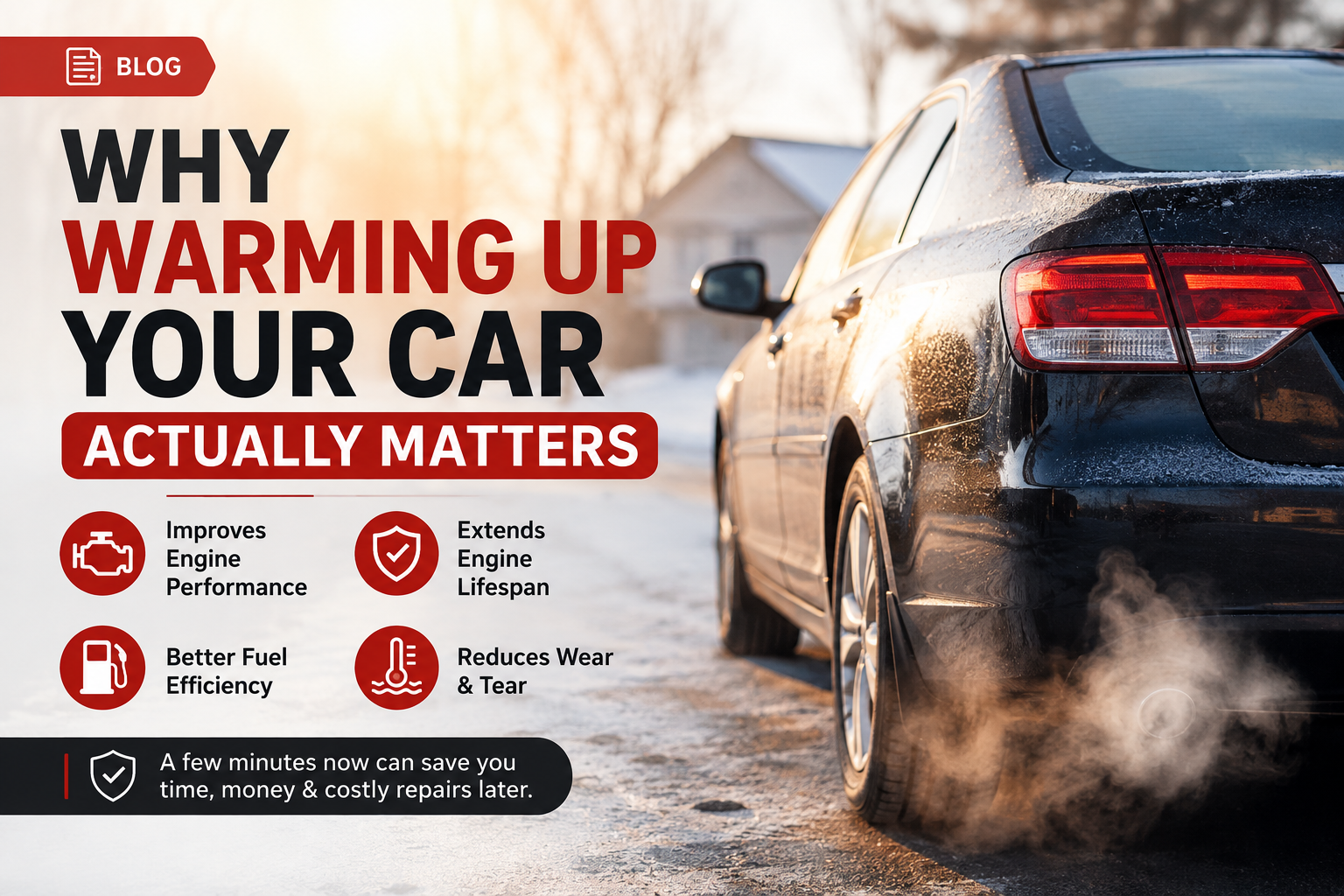
Why Warming Up Your Car Actually Matters
Why Warming Up Your Car Actually Matters
On a cold morning, it’s tempting to just hop in and drive off right away. But giving your car a short warm-up first isn’t just an old habit — it can genuinely protect your engine and improve how your car performs. Here’s why it matters and how to do it right.
What Happens When an Engine Is Cold
When your car sits overnight, the engine oil settles and thickens, especially in colder weather. Oil is what keeps metal engine parts moving smoothly against each other without excessive friction. When you start the engine cold, that oil hasn’t fully circulated yet, which means critical components are running with less lubrication than they need.
Warming up the car for a minute or two allows the oil to warm slightly, thin out, and circulate properly before you put real strain on the engine by driving.
Why It’s Especially Important in Cold Weather
Cold temperatures make oil thicker and slower to flow. In freezing conditions, an engine that’s put under load immediately — accelerating onto a highway, for example — is working harder than it should, with less protection where it counts. Over time, repeatedly stressing a cold engine can contribute to faster wear.
Cold weather also affects the battery and fluids, so a short warm-up gives everything in the car, not just the engine, a moment to reach a more stable operating state.
It’s Not Just About the Engine
Warming up also benefits things you might not think about:
- Visibility — a few minutes lets the windshield defrost and defog properly, so you’re not driving with limited sight lines.
- Tire performance — cold tires have less grip until they warm up slightly, which matters for handling and braking.
- Cabin comfort and safety — a warm interior means less distraction from being cold, and clear windows mean better awareness of your surroundings.
How Long Should You Warm Up Your Car?
You don’t need to let a modern car idle for ten minutes — that’s more of an older-vehicle habit and can actually waste fuel and add unnecessary emissions. For most cars today, 30 seconds to 2 minutes of idling is enough to get oil circulating before you drive off. The best approach is often to start the car, let it idle briefly, and then drive gently for the first few minutes rather than accelerating hard right away.
The Bottom Line
Warming up your car isn’t just superstition — it’s a simple habit that protects your engine, improves safety, and helps your car perform the way it’s supposed to, especially in colder weather. A short warm-up combined with gentle driving for the first few minutes is one of the easiest ways to extend your vehicle’s life.
Have questions about how cold weather affects your specific vehicle? Contact us — we’re happy to help you keep your car running smoothly all year round.